Overview
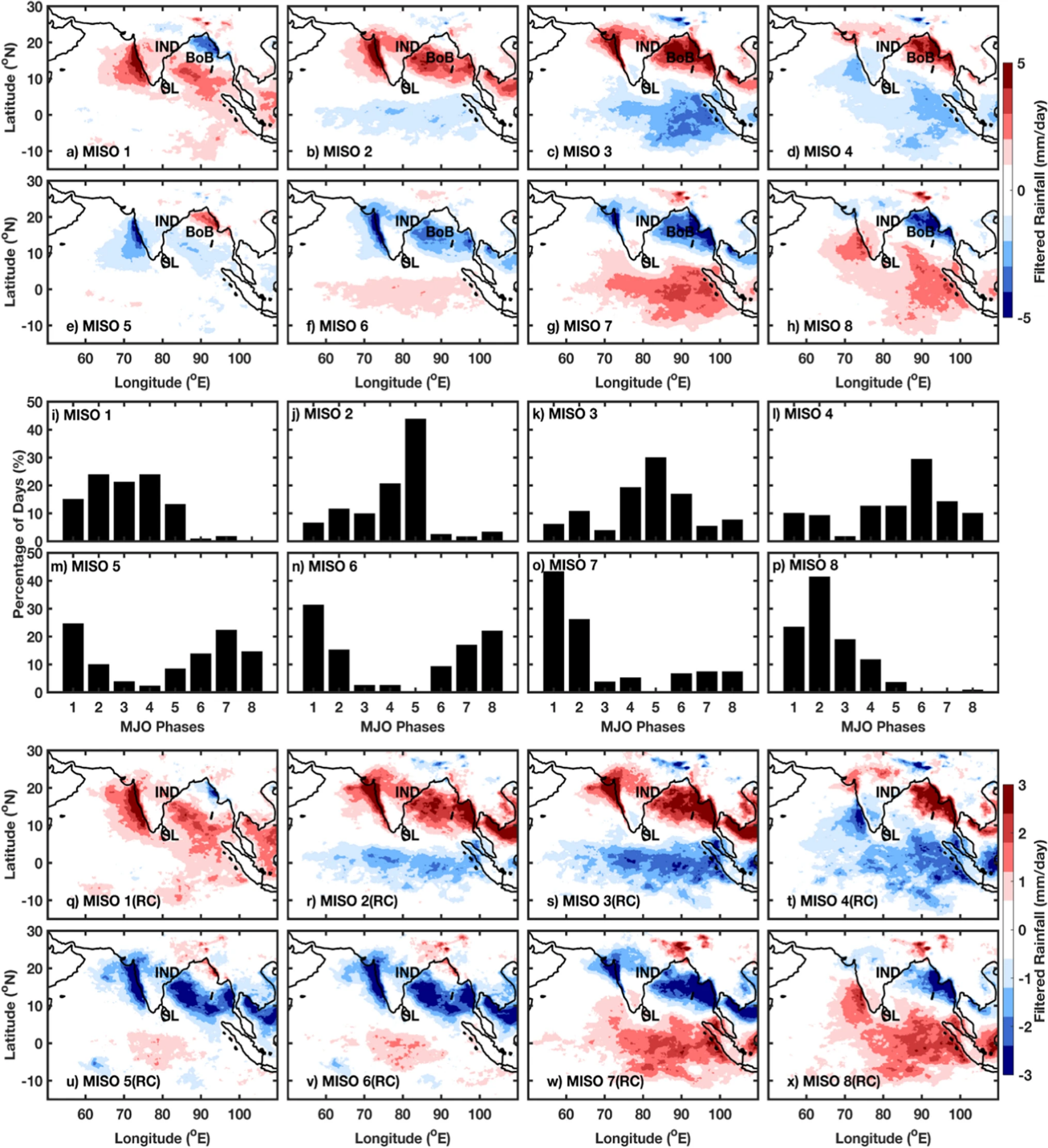
The Indian Summer Monsoon is driven by a continuous, dynamic exchange between the ocean and the atmosphere. The intraseasonal rhythms that govern this massive system — specifically the Monsoon Intraseasonal Oscillation (MISO) — act as a master switch for regional climate. Tracking these cycles reveals how MISO's active and break phases dictate the birth of rain-bearing monsoon depressions in the atmosphere while simultaneously triggering extreme marine heatwaves in the Bay of Bengal. Ultimately, the monsoon is not a steady seasonal force, but a highly interconnected system where the sea and sky constantly react to one another.
Focus Areas
- Evaluation of standard intraseasonal indices (MJO, MISO, BSISO) to build a unified framework for mapping monsoon rainfall variability.
- Spatiotemporal tracking of Monsoon Depressions and their dependence on specific large-scale MISO phases.
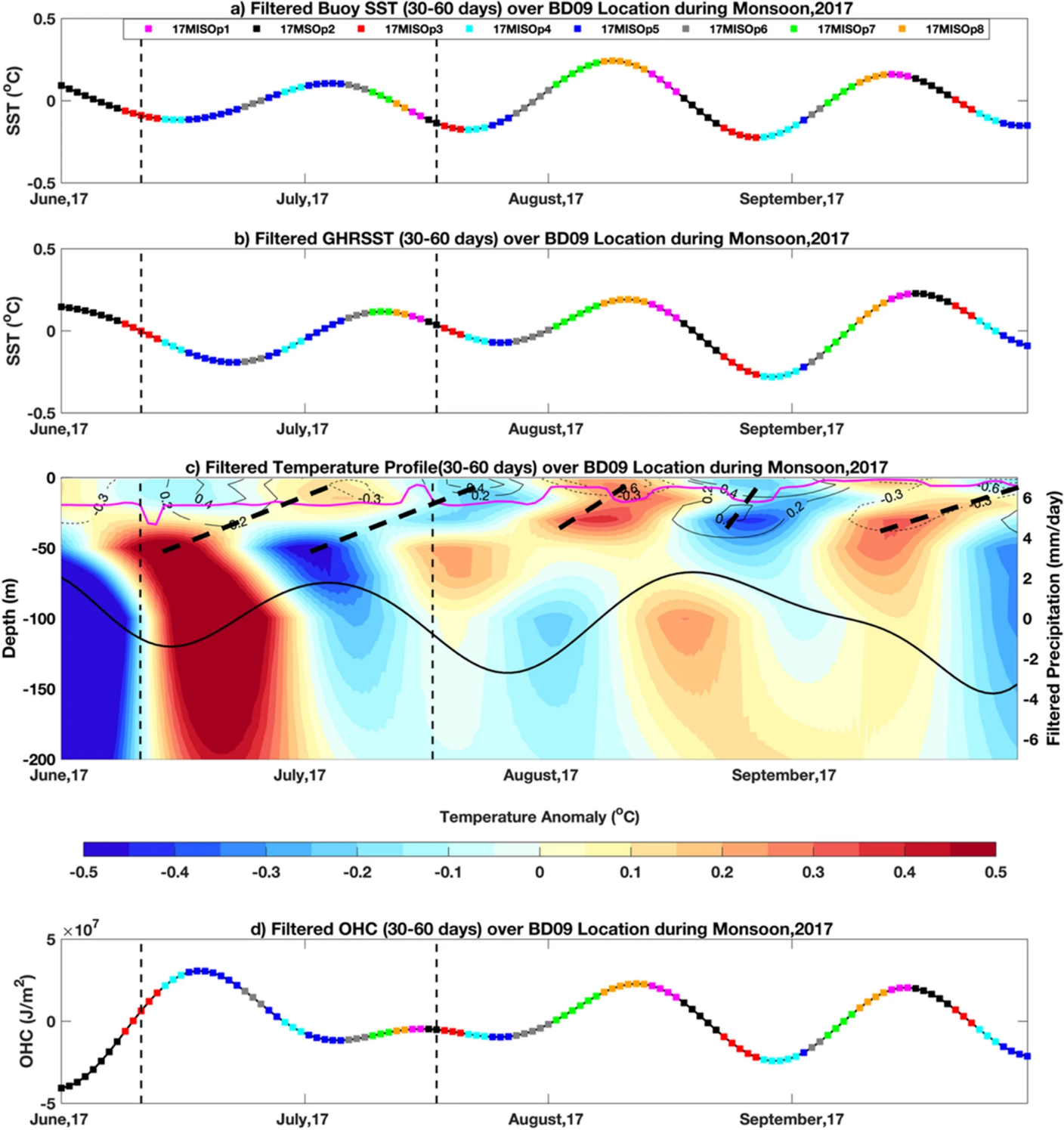
- Analysis of the air-sea interactions and oceanic conditions that either sustain or suppress the genesis and intensification of synoptic events.
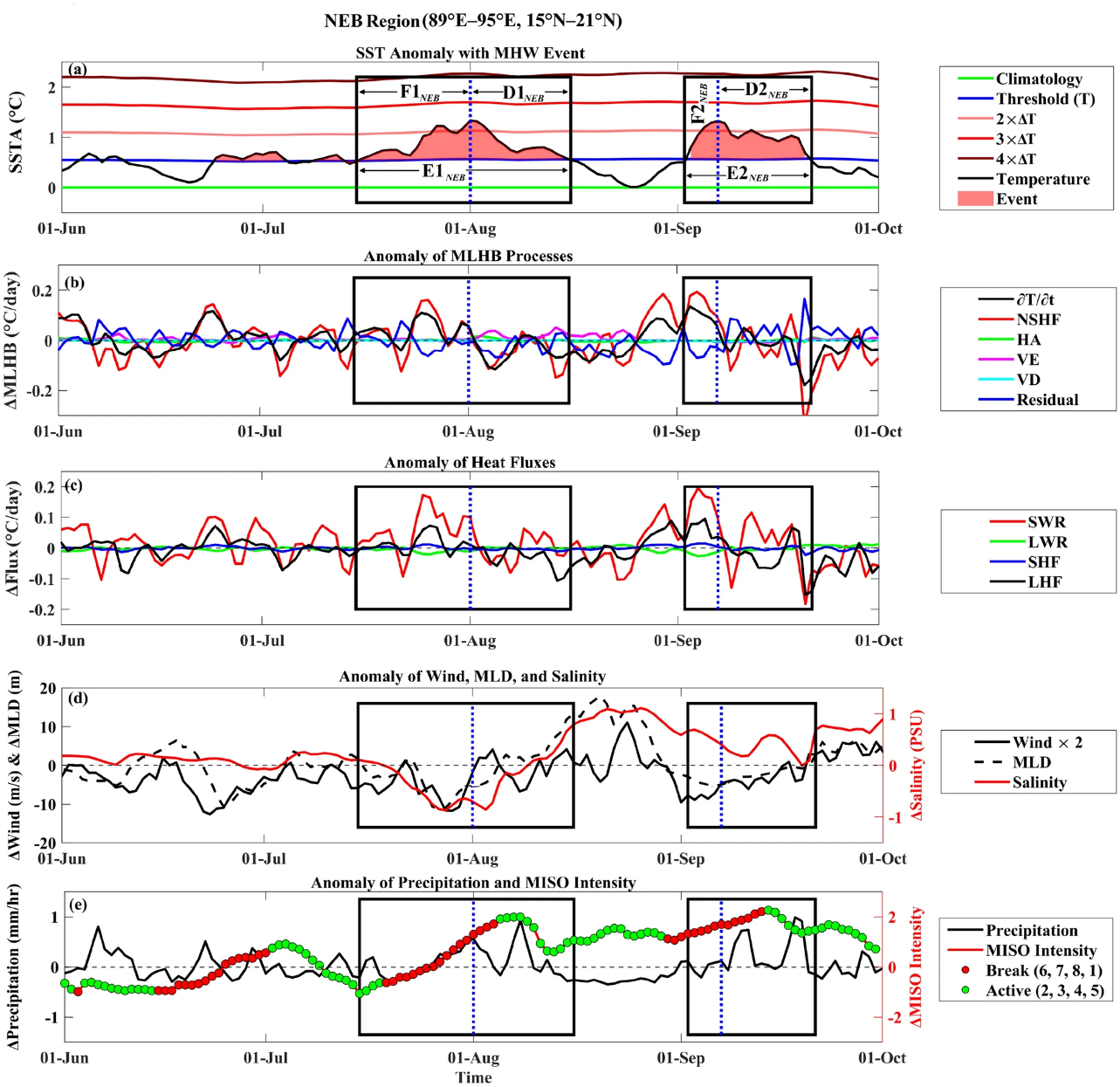
- Identification of the primary thermodynamic drivers — such as surface heat fluxes and stratification — behind the anomalous formation of marine heatwaves during monsoon.
- Investigation of the two-way coupling between oceanic heatwave evolution and the atmospheric active/break cycles of the monsoon.
Interesting Results
Why It Matters
Understanding the direct links between large-scale monsoon oscillations, synoptic storms, and oceanic heatwaves is critical for improving extended-range weather forecasting. As climate change intensifies these extremes, these thermodynamic insights provide the framework needed to better predict heavy regional flooding and marine thermal anomalies, ultimately helping to protect vulnerable coastal communities and economies.